
Winter Operation of Heat Transfer Equipment
By AITESA
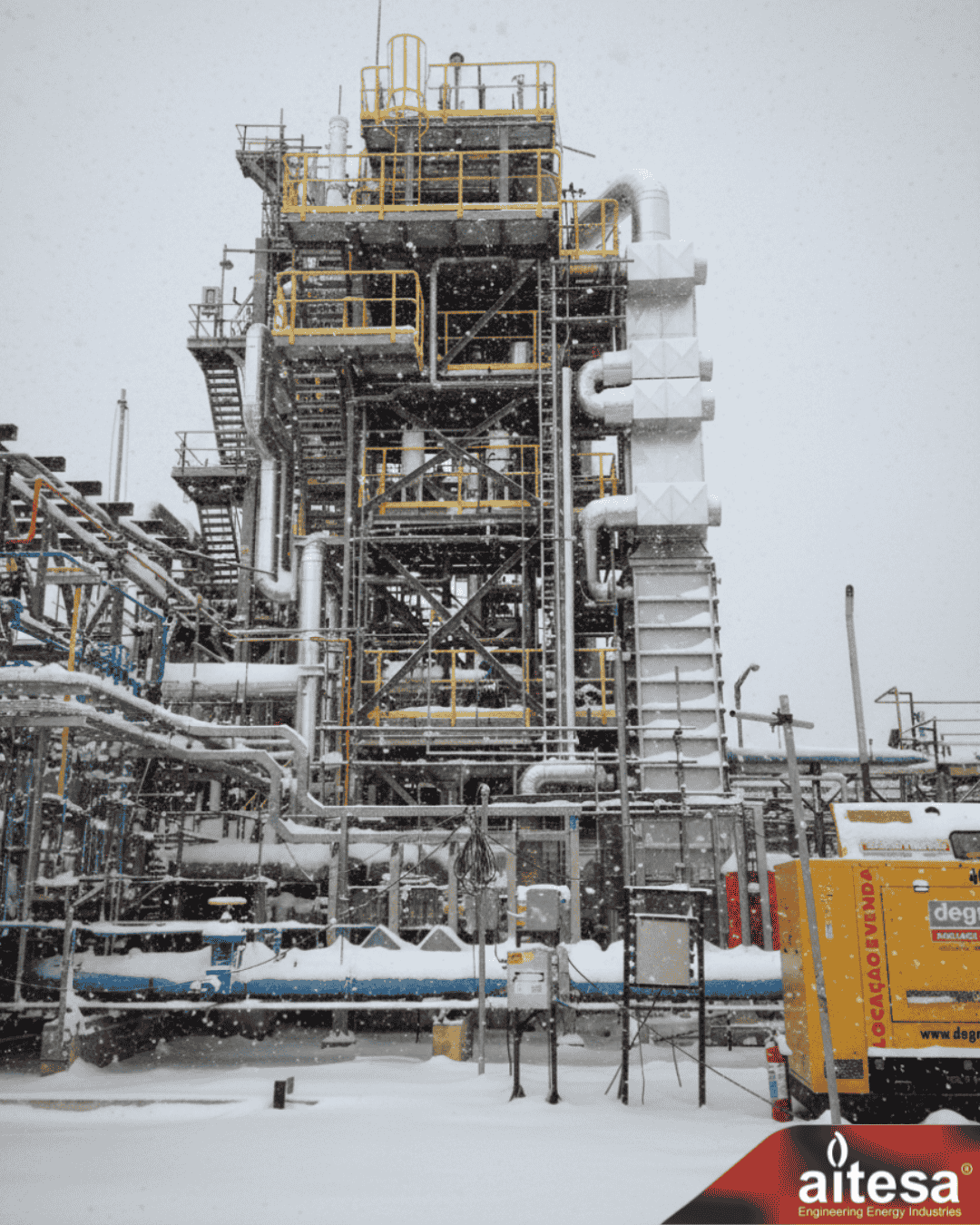
Why Cold Conditions Demand Special Attention in Industrial Plants
Winter brings a set of thermal, mechanical and operational challenges that can significantly alter the behavior of heat transfer equipment. Low ambient temperatures modify fluid properties, stress materials and expose instrumentation to conditions that can compromise both safety and efficiency. For this reason, preparing equipment for the cold season is not simply a maintenance task; it is a strategic requirement for reliable industrial operation.
At AITESA, we help plants anticipate these conditions and adapt their systems so that performance remains stable even when temperatures fall well below ordinary design scenarios.
Instrumentation: The Area Most Vulnerable to Winter Conditions
Among all plant systems, instrumentation is often the first to reveal the effects of cold weather. Sensors, transmitters, pressure taps and impulse lines are exposed to condensation, ice formation and partial blockages that distort measurements or interrupt signals entirely. These phenomena can slow down the response of field instruments, alter the accuracy of readings or generate spurious trips in control systems.
When instrumentation fails, the consequences propagate immediately: burner management systems become unstable, draft control loses precision, flow regulation becomes erratic and safety interlocks may activate incorrectly. Ensuring adequate insulation, heat tracing and proper calibration for cold starts becomes essential to preserve measurement integrity. In many facilities, the reliability of winter operations depends as much on the condition of their transmitters and impulse lines as on the state of their major equipment.
Mechanical and Structural Effects of Cold Weather
Equipment exposed to winter temperatures undergoes mechanical stresses that are not always visible but are highly relevant. Materials contract as temperature decreases, and this contraction can overload welds, joints and structural connections. Gaskets become less flexible, seals lose their ability to adapt to small movements and auxiliary lines made of brittle materials may crack under repeated freeze–thaw cycles. Boilers, HRSGs, air preheaters and process heaters are particularly sensitive to these effects, especially during cold starts or rapid temperature fluctuations.
When Cold Helps, and When It Creates New Problems
Not all consequences of winter are negative. Air coolers frequently benefit from moderate cold, as the increased temperature difference improves heat rejection and can raise thermal efficiency. However, this advantage disappears in extreme climates. Excessive overcooling can cause condensation and ice deposits on finned surfaces, deforming equipment, restricting airflow and ultimately reducing or blocking capacity. In such environments, air coolers often require specific adaptations such as variable-pitch fans, bypass systems or de-icing strategies to maintain stable operation.
Preparing for Winter: A Necessary Engineering Discipline
Ensuring reliable winter operation begins with a thorough review of equipment and control strategies. Minimum flow conditions must be verified, control logic adjusted for cold starts and insulation and heat tracing checked across the plant. Drainage and venting systems require special attention to prevent trapped fluids from freezing, while critical liquids such as thermal oils or condensates must remain within safe operating ranges. Above all, instrumentation must be inspected, protected and validated to ensure accurate and stable readings throughout the season.
A Proactive Approach to Winter Reliability
Cold weather is not merely a seasonal inconvenience. It is an engineering scenario that demands anticipation, discipline and a deep understanding of how temperature affects thermal equipment, instrumentation and plant operation as a whole. At AITESA, we assist our clients in evaluating their vulnerabilities, adapting their equipment and implementing operational strategies that ensure safe and efficient performance during winter. Our goal is simple: to help industrial facilities operate with confidence, even under the most demanding ambient conditions.
Talk to an expert
Aitesa has more than 40 years of experience designing and supplying heat recovery boilers.


